
Traditional cement board causes hidden bathroom mold and costly callbacks in the humid U.S. Sun Belt. See how Grade 0 mold-resistant XPS backer boards cut risk, speed up installation and lower long-term ownership costs for hotels, multifamily and coastal properties.
1. Introduction: The Mold Grinding Machine of the U.S. Sun Belt — Billions in Hidden Asset Risk
The U.S. Sun Belt features persistent high heat and extreme ambient humidity, creating ideal breeding conditions for hidden bathroom mold growth. Wet-area substrate failure in this region is not merely a cosmetic issue, but a systemic operational and financial risk for hotels, multifamily buildings, and coastal properties. Traditional cement board paired with field-applied liquid waterproofing suffers inherent material defects in humid climates. Porous substrates trap residual moisture behind tile, enabling hidden mold colonization within just a few months, leading to costly demolition, rework, and ongoing legal and asset risks.
By the time mold odors or surface discoloration appear, large-scale remediation is unavoidable. This article analyzes multi-layered risks of conventional cement board systems in Sun Belt wet areas, and introduces high-performance closed-cell XPS backer boards that eliminate mold-friendly moisture conditions at the source. It also verifies the measurable operational, financial and compliance advantages for local renovation, new build and post-storm reconstruction projects.
This guide breaks down the five layers of risk that make cement board systems unreliable in the Sun Belt, explains how closed-cell XPS waterproof backer boards eliminate the root conditions for mold growth, and quantifies the operational and financial benefits for hotels, multifamily assets, coastal properties and post-hurricane reconstruction projects. Coastal salt spray corrosion and rainy-season schedule risks are also addressed as region-specific challenges.
2. The Hidden Cost of Mold: Why Cement Board Systems Fail in the Sun Belt
Wet area substrate failure in the Sun Belt is never just a waterproofing issue. It triggers cascading costs across material performance, legal exposure, asset value, construction schedules and long-term operations.
2.1 Material-Level Flaw: Porous Structure as a Mold Petri Dish
Cement backer boards are manufactured with a highly porous internal structure. When exposed to the Sun Belt’s persistent ambient humidity, and to routine water exposure in shower environments, they absorb and retain moisture deep within the core.
Standard cement boards typically show water absorption rates of 10% or more after 96 hours of immersion. Mold growth requires only sustained humidity above 60% to activate, meaning a saturated cement board substrate creates ideal conditions for Aspergillus niger and Stachybotrys chartarum (black mold) to colonize.
The greatest danger is invisibility. Mold grows on the back side of the tile and within the substrate, completely out of sight. By the time surface staining, musty odors or grout discoloration alert property managers, contamination has already spread across the entire wall cavity. There is no partial repair option — full tile demolition, substrate replacement and mold remediation are required.
2.2 Legal & Asset Risk: Mold as a Silent Property Value Destroyer
In Florida and Texas, mold carries disproportionate financial and legal consequences that most project teams underestimate.
Most standard residential and commercial insurance policies in Florida include limited sub-limits for mold-related remediation costs, with coverage caps commonly set at low five-figure amounts. Insurers frequently deny mold claims stemming from long-term moisture accumulation, poor material selection, or inadequate ongoing property maintenance, as these are classified as preventable operational issues rather than sudden, covered perils. Professional mold remediation for commercial wet areas often incurs substantial expenses, and unresolved mold issues across multifamily building portfolios can accumulate into significant overall remediation overhead for property owners.
Legally, Florida and Texas uphold strict habitability standards for rental properties. Persistent, unaddressed mold conditions can entitle tenants to lease termination, rent abatement, and compensatory damages. Individual dispute settlements vary widely based on contamination severity, property type, and case circumstances. Additionally, widespread mold outbreaks across multifamily communities carry inherent risks of group litigation, which can result in substantial financial settlements and long-term brand and asset reputational damage for property operators.
Persistent mold issues also negatively impact building asset performance and market value. Unresolved wet-area contamination problems can lead to measurable property value depreciation, eroding long-term asset equity for real estate investors and property holders.
2.3 Coastal Special Risk: Salt Spray Corrosion and Halved Service Life
For properties within one kilometer of the Atlantic Ocean, Gulf of Mexico or coastal bay waters, an additional layer of degradation comes into play: C5-M class marine atmospheric corrosion.
Coastal salt spray carries chloride concentrations 5 to 10 times higher than inland environments. Over time, chloride ions penetrate porous cement board substrates and reach the underlying steel fasteners and light-gauge steel framing. Standard carbon steel screws and galvanized studs begin corroding within 3 to 5 years in this exposure.
As fasteners rust, they lose holding strength, causing panels to loosen, waterproofing seams to separate and tile adhesion to fail. The result is that coastal hotel and resort bathroom substrates typically have only 50% of the service life of equivalent inland installations.
Secondary damage includes rust staining that seeps through grout lines and discolors tile finishes, creating visible maintenance issues that directly hurt guest satisfaction scores and online review ratings.
2.4 Construction-Level Pain Points: Rainy Season Schedule Delays and Uncontrolled Quality Risks
The Sun Belt’s hurricane season, running from June through November, brings not only heavy rainfall but also sustained ambient humidity levels above 90%. For wet-area construction, this creates a dual crisis: extended cure times and degraded workmanship.
Field-applied liquid waterproofing membranes, the standard companion to cement board, require controlled temperature and humidity to cure properly. In peak humid conditions, cure time stretches from 4 hours to 12 hours or more, effectively doubling the installation cycle per bathroom. On large hotel and multifamily renovation projects, this cascades into weeks of schedule slippage.
For hospitality owners, every day of downtime is pure revenue loss. Mid-tier business hotels generate $150–$300 per room per day, while luxury coastal resort rooms can generate $300–$800. A 10-day schedule slip on a 100-room property translates to $150,000 to $800,000 in lost top-line revenue before rework costs are even counted.
Worse than delay is hidden quality risk. High humidity causes liquid membranes to cure unevenly, creating pinholes, blisters and thin spots that are invisible to inspectors at handover. Industry data shows that waterproofing installed in >90% humidity conditions has a 3x higher long-term leak and mold failure rate than installations completed in controlled conditions.
2.5 Operations-Level Pain Points: The Maintenance Cost Black Hole for High-Turnover Properties
In high-occupancy, high-turnover property types, mold and substrate failures don’t just cause one-time repair costs — they become recurring operational drag that erodes net operating income year after year.
For multifamily apartment operators, bathroom mold is consistently a top-three cause of tenant turnover. The cost of a single tenant turnover — including vacancy loss, marketing, make-ready and leasing fees — averages roughly $4,000 per unit. Reactive mold remediation also costs 3x more than proactive, material-level prevention, because it requires full demolition and tenant relocation.
For senior living and skilled nursing facilities, mold contamination introduces dual operational and compliance risks. Vulnerable resident populations are more sensitive to poor indoor air quality, which can lead to resident discomfort, facility complaints, and heightened operational liability. Uncontrolled mold growth can also conflict with state-level healthcare facility hygiene and safety compliance standards, potentially resulting in regulatory review, operational penalties, and elevated litigation risks for facility management teams.
For commercial fitness centers, resort pool areas and spa facilities, the problem is amplified by constant high humidity and chlorine exposure. Ordinary cement board substrates degrade rapidly in these conditions, with delamination and breakdown beginning within 3–4 years. Annual wet-area maintenance costs can exceed 5% of initial construction value, year after year.
3. Tile Backer Pro Solution: Four-Dimensional Mold Prevention System That Eliminates Mold at the Source
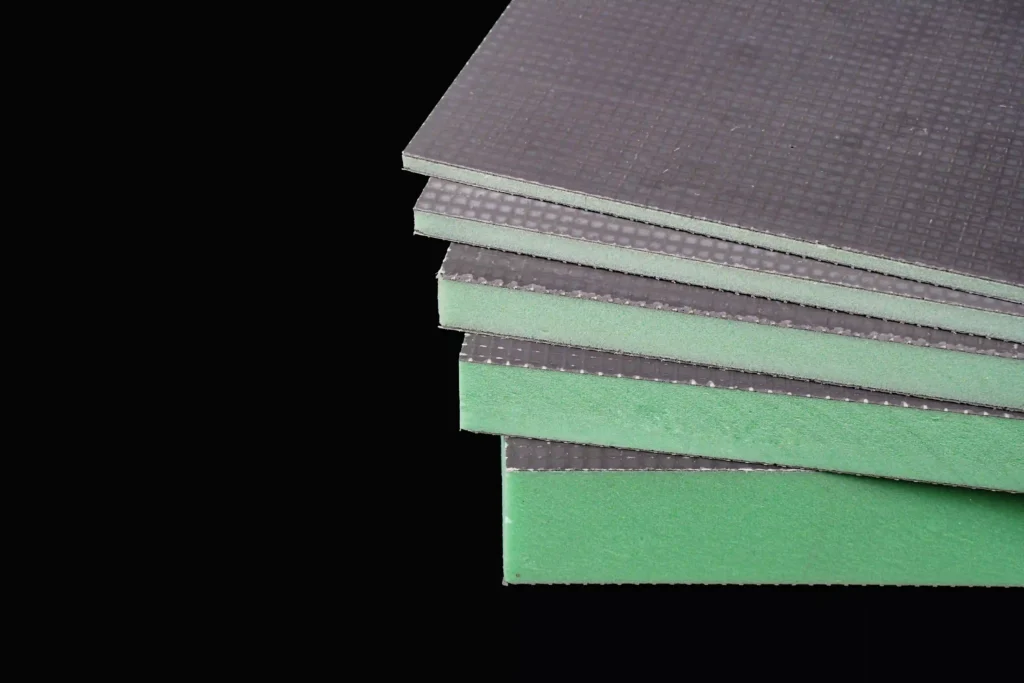
Tile Backer Pro XPS waterproof backer boards address Sun Belt mold risks not with surface treatments or aftermarket coatings, but by eliminating the root conditions that allow mold to grow. The four-dimensional system targets material biology, moisture ingress, coastal durability and installation quality in a single engineered panel.
3.1 Dimension 1: Grade 0 Mold Resistance That Blocks Colonization at the Material Level
The foundation of the system is verified Grade 0 mold resistance — the highest performance rating per standard test methods — confirmed through standardized testing. Under high-humidity test conditions, no mold growth is observed on the panel surface or within the core structure.
This resistance is built into the material itself, not applied as a temporary surface coating. The closed-cell XPS core contains no organic nutrients that mold can feed on, and the modified polymer cement face coat is formulated with integral antimicrobial inhibitors.
As an added hygiene benefit, the panels also deliver broad-spectrum antibacterial performance: 98.18% reduction against E. coli and 98.60% against Staphylococcus aureus. This makes the system particularly well suited for hospitality, healthcare and senior living projects where surface hygiene is a priority.
3.2 Dimension 2: Integral Waterproofing That Cuts Off Mold’s Water Supply
Mold cannot grow without moisture. Tile Backer Pro panels eliminate sustained substrate moisture through a fully waterproof closed-cell XPS core and a dense, water-impermeable face coat.
Lab testing records water absorption of only 0.8% after 96 hours of immersion, well below the 1.0% industry benchmark. Unlike porous cement board, the panel does not wick or trap water within its structure. Water that reaches the substrate cannot penetrate the core and cannot create the sustained damp environment mold requires.
This waterproof performance is inherent to the panel, not dependent on perfect field application. Even under the Sun Belt’s 70–90% ambient humidity, the substrate remains dry from the tile side to the framing side, removing the fundamental precondition for mold growth.
3.3 Dimension 3: Salt Spray Resistant System That Defeats Coastal Corrosion
For coastal properties, corrosion resistance requires a whole-system approach, not just a better board. Tile Backer Pro’s coastal solution pairs high-density XPS panels with recommended 316L stainless steel fasteners to create a complete salt-spray-resistant assembly.
The polymer cement face coat forms a dense, low-permeability barrier that slows chloride ion penetration dramatically compared to porous cement board. The chemically inert XPS core does not react with salt moisture and retains full structural and thermal performance after years of coastal exposure.
When installed with matching stainless steel fasteners and seam sealant, the system eliminates the two most common coastal failure modes: substrate breakdown and fastener rust-through. In typical coastal applications, service life for coastal bathroom installations extends from 3–5 years to 15+ years, cutting long-term replacement and maintenance costs by 60% or more.
3.4 Dimension 4: Dry-Fit Installation That Eliminates Cure-Time Delays and Application Defects
Tile Backer Pro’s dry-installation method solves both the schedule and quality problems created by field-applied waterproofing.
Panels are factory-manufactured with integral waterproofing. On site, crews cut, fasten and seal the joints — there is no multi-coat liquid membrane application and no cure-time waiting period. Daily installation output roughly doubles, and total bathroom installation time drops from 3–5 days to 1–2 days per unit.
Equally important, the system eliminates by design the most common waterproofing failure modes: pinholes, thin spots, blisters and uneven coverage. Because the waterproofing is built into the panel at the factory under controlled conditions, installation quality is consistent from unit to unit and from job to job. High-humidity weather no longer creates hidden defect risk or schedule risk.
4. Scenario-Specific Solutions: 6 High-Value Applications for the Sun Belt
Tile Backer Pro’s four-dimensional mold and moisture resistance delivers targeted value across the highest-priority construction and renovation segments in the Southeast Sun Belt.
1. Chain Hotels & Vacation Rental Renovations Dry-fit installation cuts room downtime by 60%, allowing properties to complete renovations during narrow off-season windows and minimize lost revenue. Grade 0 mold resistance reduces guest complaints, prevents negative review cascades and lowers long-term callback rates for maintenance teams.
2. Multifamily Apartment Assets Permanent substrate moisture control reduces tenant turnover caused by mold and water damage, and limits exposure to habitability claims and class-action litigation. More durable performance also extends capital replacement cycles, improving net operating income and property valuation.
3. Coastal Luxury & Oceanfront Residential The full salt-spray-resistant system, paired with 316L stainless steel fasteners, extends bathroom substrate service life from 3–5 years to 15+ years. This protects high-value property assets from premature degradation and preserves resale value in C5-M marine corrosion zones.
4. Post-Hurricane Reconstruction & Storm Repair Fast, weather-stable installation accelerates rebuild timelines after storm events, helping properties return to service quickly. The integral waterproof and mold-resistant design also provides more durable long-term performance against future heavy rain and humidity cycles.
5. Senior Living & Healthcare Communities Rigorous hygiene and indoor air quality standards are mandatory for senior care and medical facilities. The mold-inhibiting and antibacterial properties of Tile Backer Pro support standardized sanitary management, helping facilities maintain regulatory compliance, stabilize operational safety, and avoid compliance disputes and administrative penalties.
6. Commercial Pools, Spas & Fitness Center Wet Areas The dense, non-porous panel structure resists constant high humidity and chlorine exposure without delaminating or breaking down. This reduces annual wet-area maintenance costs and extends service intervals for high-traffic commercial recreation facilities.
5. Project Economics: Why Slightly Higher Upfront Cost Delivers Multiples in Long-Term Savings
At first glance, cement board may carry a lower material unit price. When total installed cost, downtime revenue loss, callback expense and long-term liability are factored in, Tile Backer Pro delivers a lower total cost of ownership from year one onward.
Labor and schedule savings: Dry installation reduces on-site labor hours by approximately 40% per bathroom. On a 100-room hotel renovation, a 10-day schedule compression recovers $150,000–$300,000 in room revenue — an amount that alone covers the entire material premium multiple times over.
Reduced remediation and callbacks: Eliminating the root conditions for mold growth cuts long-term wet-area maintenance and remediation costs by an estimated 60% over a 10-year holding period for typical coastal projects. For multifamily and hospitality portfolios, this represents a material reduction in recurring operating expense.
Lower legal and insurance exposure: Reduced mold risk helps control insurance premiums, reduces claim frequency and limits exposure to tenant litigation and habitability claims. For large asset portfolios, these risk reductions carry significant financial value beyond direct material and labor savings.
In most Sun Belt commercial and multifamily applications, the incremental upfront investment in XPS backer boards is fully recovered within 2–3 years through labor savings, avoided downtime and reduced maintenance.
6. Technical Boundary Conditions
All performance data is derived from standardized laboratory testing conducted under controlled conditions. Actual in-service performance depends on project-specific factors including installation workmanship, substrate preparation, environmental exposure, maintenance practices and design details.
Grade 0 mold and antibacterial ratings reflect standard test conditions. Performance may vary under extreme prolonged water immersion, standing water or abnormally severe contamination conditions.
Coastal salt spray performance requires proper system design including compatible stainless steel fasteners and appropriate seam detailing. For extreme C5-M marine environments, project-specific engineering review is recommended.
This document is for technical reference only and does not constitute an engineering warranty or guarantee of specific field results.
7. Next Steps
For properties and projects across the U.S. Sun Belt, upgrading to a mold-resistant XPS backer board system is one of the highest-return investments available for wet-area durability, operational cost control and risk reduction.
Tile Backer Pro supplies ICC-ES listed Grade 0 mold-resistant XPS waterproof backer board systems engineered specifically for high-humidity, coastal and high-turnover construction markets.
For your upcoming project:
– Request the Grade 0 Mold & Waterproof Test Report Package, including full laboratory test data and specification language for submittal packages.
– Download the Sun Belt Hotel Renovation ROI Calculator to estimate downtime savings and total cost of ownership for your project scope.
– Order a project sample kit to evaluate cutting, handling and installation performance on site.
Company Information
Tile Backer Pro company
Contact information:+86 17719559132
Email: an@tilebackerpro.com
Website:www.tilebackerpro.com