
The most expensive green building failures in California don’t come from windows or cavity insulation — they come from an overlooked tile backer board that breaks your thermal model and violates IAQ rules.
Tile Backer Pro low-VOC XPS backer boards solve hidden compliance risks for passive house, LEED, seismic renovation and modular bathroom projects across the West Coast.
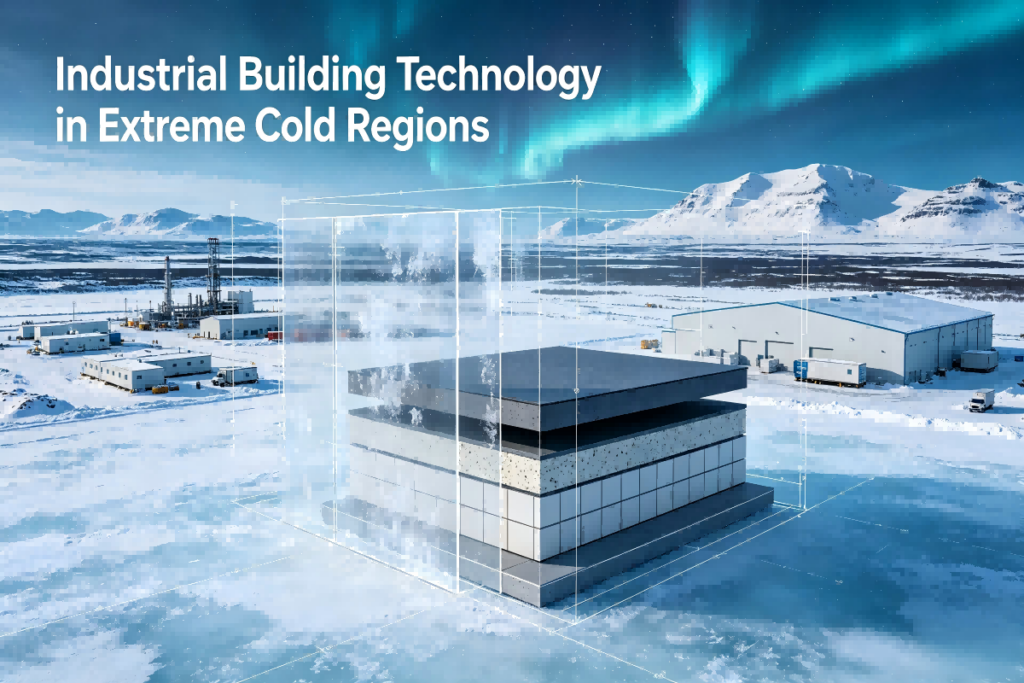
Introduction: The Hidden Cost Catastrophe in Arctic Remote Zones — How a Failed Wet Area Substrate Triggers Six-Figure Maintenance Bills
A remote mining camp in Yukon, Canada, passes all initial construction inspections and goes into full operation — yet within 18 months, 70% of shared bathroom tiles begin to loosen and fall off the walls. The failure is not caused by poor installation, but by a standard cement backer board that turned brittle at -42°C winter lows and shattered under permafrost frost heave displacement.
Across northern Canada, Alaska and the Arctic industrial belt, this type of silent substrate failure is an uncalculated budget killer. The region faces some of the harshest building conditions on the continent: sustained subzero temperatures, seasonal permafrost movement, and logistical isolation that makes every repair mission a major mobilization event. For cold storage developers, resource EPCs and remote camp operators, wet area substrate durability directly determines total project lifecycle cost.
Most project teams still specify standard cementitious or basic foam backer boards as generic commodities. These materials perform adequately in temperate climates, but fail rapidly under extreme cold and frost heave. Worse, because the damage starts inside the board core, it remains invisible until tiles delaminate and waterproofing fails — by which point wall framing corrosion and foundation moisture intrusion have already occurred.
This is not a trivial finish detail. In remote northern projects, a single wet area rebuild can cost 5–10 times the material price alone, including crew mobilization, equipment rental, heated temporary facilities and operational downtime.
The Three Core Pain Points of Cold-Zone Wet Area Construction
Conventional backer boards do not just wear out faster in arctic conditions — they fail through three distinct, climate-specific mechanisms that compound into severe financial and operational risk.
1. Low-Temperature Brittleness: Materials Shatter When Temperatures Drop Below -40°C
Standard polymer-modified boards and basic XPS panels are engineered for temperate climates. Once ambient temperatures fall below -20°C, their core materials lose impact toughness and become brittle.
- Extreme winter cold causes micro-cracks to form inside the board structure; repeated freeze-thaw cycles expand these cracks until the panel loses structural integrity.
- In cold storage facilities, daily hot water washdowns create rapid temperature swings that accelerate thermal stress fatigue, cutting substrate service life by 60% compared to room-temperature environments.
- Even minor impact during maintenance or equipment movement can crack cold-brittle boards, breaking the waterproof barrier and allowing moisture to penetrate the wall assembly.
2. Permafrost Frost Heave: Foundation Deformation Destroys Rigid Substrates
Up to 50% of northern construction sites sit on continuous or discontinuous permafrost. Seasonal freeze-thaw of the active soil layer creates measurable vertical and lateral foundation movement that rigid materials cannot absorb.
- Cement backer boards have zero flex tolerance. Even 5–10mm of frost heave displacement is enough to crack panels, break tile bonds and rupture seam seals.
- Once waterproofing fails, meltwater and shower steam seep into the wall and foundation, accelerating permafrost thaw and creating a vicious cycle of worsening deformation and structural damage.
- For permanent facilities built on engineered permafrost foundations, substrate cracking is often the first visible sign of escalating structural risk.
3. Prohibitive Remote Rework Costs: Failure Multiplies Lifecycle Expenses
In northern Canada and remote Alaska, construction and repair costs are not comparable to southern markets. Geographic isolation, limited labor supply and harsh working conditions turn every material failure into a major financial event.
- Specialist repair crews require charter flights, heated accommodation and specialized equipment, making single-site mobilization costs 5–10 times higher than urban projects.
- Winter repair windows are extremely narrow, and wet-work materials cannot cure in subzero temperatures, forcing facilities to operate in degraded condition for months.
- For operational camps and cold storage facilities, downtime during wet area rebuilds reduces staff capacity and disrupts production schedules, creating indirect costs that far exceed construction expenses.
Tile Backer Pro: Wide-Temperature Structural XPS Backer Board Built for Arctic Grade Durability
Tile Backer Pro wide-temperature structural XPS backer boards are formulated at the material level to solve all three core cold-zone failure mechanisms. Unlike standard boards that rely on surface coatings for cold resistance, our modified closed-cell XPS core delivers extreme temperature stability, frost heave tolerance and zero water absorption as inherent properties.
| Parameter | Standard Cement Backer Board | Basic XPS Backer Board | Tile Backer Pro Wide-Temperature Grade |
|---|---|---|---|
| Service Temperature Range | 0°C–60°C, brittle below freezing | -20°C–70°C, toughness drops in deep cold | -196°C–+120°C lab tested, stable at -40°C field conditions |
| Frost Heave Resistance | Rigid, cracks under minor displacement | Limited flexibility, low compressive strength | High compressive strength + controlled flexibility, absorbs ground movement |
| Water Absorption | Porous, high absorption | Low absorption, seam leakage risk | Near-zero water absorption, ≤0.1% by volume per ASTM C272 |
| Installation Method | Wet work, temperature-sensitive curing | Semi-wet, requires sealing cure | Fully dry mechanical installation, operable down to -10°C |
| Expected Service Life (Arctic) | 1–2 years | 3–4 years | 15+ years (based on accelerated freeze-thaw aging testing and inherent material frost resistance) |
Ultra-Wide Temperature Stability: No Brittleness, No Cracking at Extreme Subzero Temperatures
Our proprietary modified XPS formulation maintains consistent structural toughness across an extremely wide temperature range. Lab tested down to -196°C (liquid nitrogen exposure) and up to +120°C, the core material retains its impact resistance and flex strength even under sustained -40°C arctic winter conditions.
- Eliminates cold-brittle cracking caused by extreme winter lows and cold storage temperature cycling
- Withstands rapid temperature swings from hot washdowns to ambient freezer temperatures without thermal stress fatigue
- Maintains full tile bond strength year-round, preventing delamination even during the coldest operating months
High Compressive Strength with Controlled Flex: Absorbs Frost Heave Without Failure
Tile Backer Pro balances high compressive strength with engineered flex tolerance, making it uniquely suited to permafrost and frost-prone foundations.
- The reinforced cementitious facing delivers high mortar bond strength and load capacity, while the XPS core absorbs micro-displacements from seasonal frost heave without cracking.
- Dimensional change rate under freeze-thaw cycling is less than 0.1% per ASTM C666 testing, preserving seam integrity and waterproof continuity even as the surrounding structure moves.
- By absorbing ground movement at the substrate level, the panel reduces stress transferred to wall framing and foundation elements, extending overall building service life.
100% Closed-Cell Core: Near-Zero Water Absorption Stops Internal Frost Damage
The root cause of most freeze-thaw substrate failure is trapped internal moisture. Tile Backer Pro’s fully closed-cell XPS structure eliminates water absorption at the material level, removing the prerequisite for internal frost expansion.
- Near-zero water absorption prevents meltwater, steam and condensation from penetrating the board core, eliminating internal ice formation and frost heave from within the substrate.
- Impermeable core structure stops moisture from migrating through the wall into foundation soils, slowing permafrost thaw and reducing long-term ground movement risk.
- Integrated waterproof facing creates a complete moisture barrier at the wet area surface, delivering full waterproof performance without liquid applied membranes.
Dry-Fast Installation: Breaking the Arctic Construction Window Bottleneck
Northern construction projects operate under a fundamental constraint that temperate zones never face: traditional wet-work materials — liquid waterproofing, thin-set mortars, and cementitious coatings — cannot cure reliably in sub-zero temperatures. This forces teams to rely on heated temporary enclosures, restricts construction to narrow 3–4 month summer windows, and dramatically inflates site setup costs and overall project timelines.
Tile Backer Pro’s fully dry mechanical installation system eliminates this temperature dependency entirely, turning a structural industry bottleneck into a competitive project advantage. This is not merely a faster installation method, but a core solution to the feasibility limitations of arctic construction.
- Extend viable construction seasons: Dry assembly removes the wet-work curing requirement, enabling installation at ambient temperatures as low as -10°C without heated enclosures. This extends the annual construction window by 2–3 months in most northern regions, compressing overall project schedules and accelerating time to operational readiness.
- Slash remote site infrastructure costs: No power tools or heated workspaces are required for basic panel assembly. This reduces on-site generator load, eliminates temporary heating expenses, and simplifies logistics for off-grid and fly-in locations where infrastructure is extremely limited.
- Reduce cold-weather worker exposure & HSE risks: Factory-prefabricated standard sizes eliminate on-site cutting, reducing outdoor work time by an estimated 60% compared to cement board installation. Fewer cold-exposure hours lower safety hazards and reduce total on-site labor requirements, a critical benefit for remote projects with limited crew availability.
For EPC teams and camp operators, the dry-fast system de-risk project schedules, cut redundant site overhead, and deliver operational facilities faster in one of the world’s harshest building environments.
Take the Next Step
Submit your project’s specific operating temperature range, foundation conditions and site accessibility details. Our technical team will provide a customized arctic-grade wet area solution, complete with lifecycle cost comparison data and installation timeline estimates for your northern project.
Technical Boundary Conditions
Wide-temperature performance data is derived from laboratory material testing under controlled conditions. Field service temperature limits depend on installation method, fastening system and wall assembly design.
Frost heave resistance is based on standard ASTM C666 freeze-thaw cycle testing. Permafrost foundation performance requires coordination with a licensed geotechnical and structural engineer.
Low-temperature installation ratings apply to dry mechanical assembly of the backer board only. Tile mortars, grouts and sealants must be used in accordance with their respective manufacturer temperature specifications.
Expected service life estimates are based on accelerated freeze-thaw aging tests and inherent material frost resistance under normal operating conditions. Actual field lifespan may vary based on exposure severity, maintenance practices and foundation movement.
This article is for technical reference only and does not constitute structural engineering advice or a performance warranty.
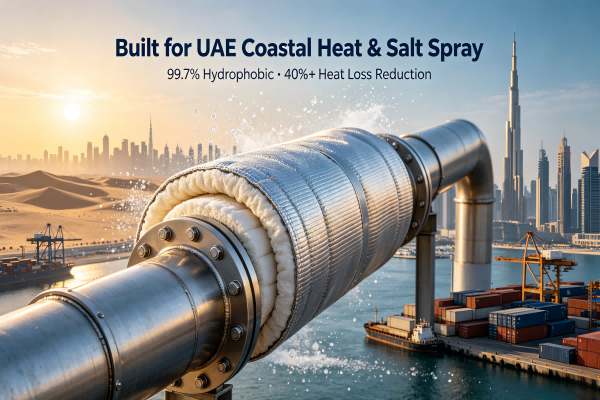
Why Traditional Insulation Underperforms in the UAE’s Harsh Coastal & Industrial Climate — And How Aerogel Blankets Deliver Results
The United Arab Emirates faces a unique combination of extreme environmental and operational challenges that push conventional thermal insulation to its limits. Year-round ambient temperatures regularly exceed 45°C, with summer peaks surpassing 50°C, while persistent Persian Gulf salt spray and high coastal humidity create corrosive conditions that degrade porous insulation materials rapidly. Intense UV radiation and periodic desert sandstorms further accelerate aging, causing traditional mineral wool and calcium silicate products to powder, shrink, and suffer significant thermal performance degradation within as little as one to two years of service under severe coastal exposure without proper moisture protection.
For the UAE’s core industries, this widespread failure of standard insulation translates directly to higher costs and operational risk. In Abu Dhabi’s oil, gas and refining hubs, absorbed moisture and salt drive severe corrosion under insulation (CUI), threatening pipeline integrity and causing unplanned shutdowns under the strict asset management standards of local energy operators. In Dubai’s premium real estate and hospitality market, thick conventional insulation eats into leasable floor space, fails to control air conditioning loads that make up 60% of building energy use, and contributes to hidden wall condensation and mold that damage property value and guest experience.
As a global trade and logistics hub, the UAE’s ports, cold storage facilities and LNG terminals also face specific insulation challenges. Bulky traditional cold insulation reduces warehouse and vessel cargo capacity, while constant vibration and salt exposure shorten service life and increase maintenance downtime. Fast-growing sectors including data centers and solar thermal energy require insulation that balances fire safety, cleanliness, space efficiency and long-term durability — needs that standard materials cannot meet simultaneously. Local green building frameworks such as Estidama Pearl and LEED also raise the bar for energy efficiency and low-VOC, sustainable materials, creating additional compliance pressure for project developers.
Woqin silica aerogel insulation blankets are engineered to directly address each of these UAE-specific pain points. Their nanoporous structure delivers class-leading thermal performance at a fraction of the thickness of traditional materials, while an integral hydrophobic formulation repels salt spray and moisture to dramatically reduce CUI risk. The inorganic aerogel matrix delivers excellent dust resistance and UV stability when paired with standard weatherproof cladding systems, effectively cutting installation and replacement costs. Our aerogel blankets deliver 3–5 times longer service life compared to equivalent R-value standard mineral wool under typical Gulf operating conditions, fully supporting compliance with local building, industrial and environmental standards.
Woqin Silica Aerogel Blankets: Built for the UAE’s Extreme Operating Conditions
Woqin aerogel insulation blankets are flexible, nanoporous thermal materials made from amorphous silica, reinforced with high-quality polyester fiber yarn and glass fiber filaments. Their unique three-dimensional nano-network pore structure delivers ultra-low thermal conductivity across a wide temperature range, paired with inherent fire resistance, hydrophobic corrosion resistance and dimensional stability that make them ideally suited to the UAE’s hot, coastal, high-sand operating environment.
In ambient conditions at 25°C, Premium S-Grade and Standard Grade aerogel blankets deliver thermal conductivity ranging from 0.017 to 0.020 W/(m·K), providing 2–3 times the insulating power of conventional mineral wool to effectively reduce building air conditioning loads and industrial pipeline heat loss. For high-temperature industrial scenarios, Standard Grade material maintains a stable thermal conductivity of 0.088 W/(m·K) at 600°C, tested via the steady-state method per GB/T 10294, with performance fully aligned with our official 25–600°C conductivity fitting curve. Differentiated from Standard Grade, our Premium S-Grade features a far flatter high-temperature performance curve, achieving only 0.043 W/(m·K) at 500°C, delivering ultra-stable thermal insulation for high-end precision industrial applications, with complete test data recorded in our professional technical datasheet.
Tested per GB/T 10299, the material achieves a hydrophobic rate of ≥99.7%, with staged anti-corrosion and waterproof performance adapting to UAE multi-scenario working conditions. For ambient and low-temperature service up to approximately 250°C, the integral hydrophobic structure effectively repels liquid water and coastal salt spray to block external moisture ingress. For sustained high-temperature working conditions above 250°C, the hydrophobic functional group will gradually fail, but the material’s inherent inorganic non-absorbent matrix and ultra-low soluble chloride content (below 20 ppm, tested per GB/T 17393) can still effectively block chloride ion infiltration. It fully complies with ASTM C795/C692 stainless steel compatibility standards, fundamentally avoiding chloride-induced CUI risks and continuously protecting pipeline and equipment integrity.
The product holds Class A1 non-combustible certification per EN 13501-1 and GB 8624 standards, meeting the strictest fire safety requirements for UAE high-rise buildings, refineries, data centers and marine vessels. Under high-temperature aging tests per ASTM C356, the high-temperature linear shrinkage rate remains below 0.8% after 96 hours of continuous operation at 649°C, eliminating thermal bridging problems and ensuring long-term stable insulation efficiency. For vibration-intensive scenarios such as marine engine rooms, the vibration mass loss is only 0.3% per GB/T 34336 testing, with extremely low dust generation and stable structural performance under long-term mechanical vibration.
All products are 100% asbestos-free and low-VOC, compliant with EU REACH and RoHS standards. Supported by third-party authoritative verification from Bureau Veritas and SGS, all performance indicators are tested in accordance with international ASTM and EN standards, fully meeting the performance specifications of UAE local building codes and industrial safety regulations. Complete certification documents and test reports can be provided to support customers in completing local SASO and Estidama project submission and compliance certification.
Targeted Solutions for UAE’s Core Industries
Premium Commercial Buildings & Hospitality
Dubai and Abu Dhabi’s iconic supertall skyscrapers, luxury hotels, large shopping malls and high-end residential projects have extremely high requirements for insulation performance, architectural aesthetics, space utilization and green building certification. Traditional thick and bulky mineral wool and thermal insulation materials severely restrict facade design flexibility, occupy a large amount of wall cavity space, compress usable and leasable area, and directly reduce the economic benefits of high-value commercial real estate. In addition, under the UAE’s year-round high temperature and high-humidity coastal climate, traditional porous insulation easily absorbs moisture, causing wall condensation, mildew and interior decoration damage, bringing high maintenance costs and poor user experience for high-end buildings.
Woqin aerogel blankets completely solve the above pain points with ultra-thin and high-efficiency thermal insulation performance. It can achieve the same R-value thermal insulation effect as traditional mineral wool with only one quarter of the thickness, freeing up more than 70% of wall occupied space and significantly increasing the leasable area and commercial value of premium buildings. The ultra-thin and flexible material adapts to complex building facade structures and old building renovation scenarios without structural modification, providing architects and developers with greater design freedom.
Excellent thermal insulation performance greatly reduces heat transfer through building walls and roofs, effectively cutting peak air conditioning loads and reducing long-term energy operation costs for buildings that require full-year refrigeration. The 99.7% integral hydrophobic structure avoids internal wall condensation and mildew growth caused by coastal high humidity, eliminating frequent facade renovation and interior maintenance costs, and improving the comfort experience of hotels and high-end residences. With low-VOC, asbestos-free environmentally friendly attributes and outstanding energy-saving effects, the product can provide effective scoring support for Estidama Pearl and LEED green building certification, helping projects meet the UAE’s sustainable construction standards.
For flat roofs exposed to extreme solar radiation with surface temperatures exceeding 70°C in summer, the inorganic aerogel matrix has natural UV degradation resistance. When matched with professional weatherproof cladding construction in accordance with standard specifications, the insulation system can maintain long-term stable performance and avoid aging and failure of traditional insulation under long-term sun exposure. In terms of acoustic performance, the 10mm-thick aerogel blanket achieves 26.4dB sound reduction effect tested per ISO 10534-2 impedance tube standard, effectively optimizing the indoor acoustic environment of high-end office buildings, hotels and residential communities without increasing wall thickness burden.
Oil & Gas Refining & Abu Dhabi Industrial Zones
Abu Dhabi’s onshore oil fields, offshore supporting facilities, Ruwais refining and petrochemical industrial zones and coastal thermal power and seawater desalination plants operate in high-temperature, high-salt spray and high-humidity extreme working environments. Local energy operators have extremely strict management standards for pipeline asset integrity and CUI risks. Traditional porous thermal insulation materials are prone to moisture and salt adsorption, which accelerates pipeline corrosion under insulation, leads to frequent equipment failures and unplanned production shutdowns, and brings huge economic losses and safety risks to industrial enterprises.
Woqin aerogel blankets are tailored for the extreme working conditions of UAE energy and chemical industries. The low-chloride and hydrophobic optimized formula effectively isolates coastal salt spray and moisture erosion. With soluble chloride content far lower than the industry standard and compliant with ASTM C795 stainless steel anti-corrosion specifications, it fundamentally suppresses chloride-induced pipeline corrosion risks. Combined with the material’s non-absorbent inorganic matrix characteristics, it continues to stabilize anti-corrosion performance under long-term high-temperature working conditions, greatly extending the service life of industrial pipelines and process equipment.
The product maintains ultra-low and stable thermal conductivity in the full temperature working range. Compared with traditional mineral wool of the same thickness under 600°C industrial working conditions, it reduces pipeline and equipment heat loss by more than 40%, effectively reducing trace heating fuel consumption and helping enterprises reduce carbon emissions and cope with the UAE’s carbon tax policy requirements. For large oil and chemical storage tanks, stable thermal insulation performance narrows the day and night temperature difference of tank bodies, reduces medium breathing loss and VOC volatile emissions, and helps enterprises meet local environmental protection supervision standards.
Aiming at the dense pipe gallery layout of UAE refineries and chemical plants, the ultra-thin and lightweight characteristics of aerogel blankets solve the pain point of traditional thick insulation occupying maintenance space. The flexible material is easy to cut and install on-site, greatly improving construction efficiency and reducing high-altitude scaffolding operation time and safety risks. Under typical Gulf coastal high-temperature working conditions, the service life of Woqin aerogel blankets is 3–5 times that of equivalent R-value traditional mineral wool, which greatly reduces the frequency of insulation replacement, cuts industrial solid waste generation, and reduces the later operation and maintenance labor costs and environmental disposal pressure of enterprises. It is also perfectly adapted to the dual harsh working conditions of high temperature and high salt in UAE seawater desalination plants, maintaining long-term stable thermal insulation and anti-corrosion performance.
Ports, Marine Logistics & Cold Storage
As a core global maritime trade and logistics hub, the UAE has super-large ports such as Jebel Ali Port and Khalifa Port, as well as a complete cold chain logistics, LNG transit and marine shipping supporting system. Local marine and cold storage facilities face long-term salt spray erosion, equipment vibration and extreme temperature working conditions. Traditional marine insulation and cold insulation materials have poor salt corrosion resistance, are easy to absorb water and fail, and have short service life. At the same time, their bulky and thick structure occupies a large amount of warehouse and ship cargo space, restricting operational revenue growth.
Woqin aerogel blankets have passed China Classification Society (CCS) certification and meet IMO FTP Code international marine fire protection standards, fully adapting to the strict safety access requirements of UAE marine projects. The low-chloride and salt-spray-resistant formula resists long-term coastal environmental erosion, avoids hull and pipeline metal corrosion caused by insulation water absorption, and has far longer service life than traditional marine insulation materials in Persian Gulf working conditions.
In the field of cold chain logistics and warehousing, the ultra-thin and high-efficiency thermal insulation advantage of aerogel is prominent. Compared with traditional cold insulation materials with the same thermal insulation effect, it increases the effective storage capacity of cold storage by more than 60%, maximizing the use of warehouse space and directly improving the unit area operating income of logistics enterprises. Stable low-temperature thermal performance reduces the temperature fluctuation frequency in the warehouse, effectively protecting the quality of fresh food, pharmaceutical and other temperature-sensitive goods, and reducing the energy consumption of refrigeration equipment.
For UAE LNG transit terminals and ultra-low temperature storage and transportation projects, Premium S-Grade aerogel blankets maintain stable structural toughness without embrittlement at -165°C ultra-low temperature, with thermal conductivity as low as 0.010 W/(m·K). The ultra-thin insulation structure greatly reduces the thickness of the cold insulation layer, maximizing the effective volume of storage tanks and transport vessels and reducing LNG gasification loss. In marine engine rooms and vibration-intensive equipment areas, the product’s ultra-low vibration mass loss avoids powder falling and structural peeling, preventing equipment dust pollution, stabilizing cabin temperature, and improving equipment operation stability and crew working environment.
Renewable Energy & Data Centers
The UAE is vigorously developing new energy and digital economy industries, represented by Masdar solar thermal power projects and Dubai large-scale data center clusters. Such emerging facilities have extremely high standards for insulation materials in terms of high-temperature stability, UV aging resistance, fire safety and environmental cleanliness, which cannot be met by traditional insulation materials.
For desert solar thermal power generation and photovoltaic supporting facilities, Woqin aerogel blankets withstand long-term 500°C+ high-temperature operation and intense desert UV radiation. The high-temperature linear shrinkage rate is less than 0.8% after long-term aging, avoiding powdering, shrinkage and performance attenuation of traditional insulation materials. The dense nano-pore structure resists desert sand dust penetration, maintains stable thermal insulation performance of heat collection pipes and supporting equipment for a long time, reduces heat loss of power generation equipment, and improves the overall power generation efficiency of solar thermal projects. It greatly reduces the later inspection and maintenance frequency of remote desert power stations, adapting to the low-maintenance operation needs of new energy projects.
For UAE mission-critical data center projects, Woqin aerogel blankets integrate A1-grade non-combustible fire safety, ultra-low dusting performance and ultra-thin space-saving advantages. The highest-level fire rating meets the strict fire protection design specifications of data centers, effectively eliminating fire safety hazards. The ultra-thin and lightweight structure does not occupy cabinet layout and wiring space, supporting high-density server deployment and future equipment capacity expansion. Extremely low dust generation under air flow and vibration ensures the cleanliness of the computer room environment, avoids precision server and electrical equipment pollution and failure risks, and guarantees long-term stable operation of data center equipment.
Product Grades & Standard Specifications
Woqin provides a full series of aerogel blanket grade options to cover all mainstream application scenarios of construction, industry, marine logistics and new energy in the UAE market, realizing precise matching of different temperature working conditions and project requirements.
Standard Grade blankets support continuous working temperature up to 650°C, with ambient thermal conductivity ≤0.020 W/(m·K), suitable for conventional industrial pipelines, civil building thermal insulation, coastal port facilities and other general scenarios. Premium S-Grade products also have a maximum continuous temperature resistance of 650°C, with an optimized ambient thermal conductivity of ≤0.017 W/(m·K), which is more suitable for high-standard oil and gas pipelines, LNG ultra-low temperature cold preservation and high-end green building projects with higher thermal insulation requirements.
Extreme Heat-H Grade is professionally developed for medium and high-temperature industrial equipment, with a continuous temperature resistance of 850°C and ambient thermal conductivity ≤0.021 W/(m·K), widely used in refinery process equipment, industrial furnace lining and high-temperature petrochemical facilities. Ultra Heat-V Grade is the ultra-high temperature resistant model of the product line, supporting 1000°C long-term continuous operation with ambient thermal conductivity ≤0.023 W/(m·K), specially used for extreme working conditions such as ultra-high temperature industrial furnaces and thermal power generation equipment.
All temperature parameters refer to continuous service working conditions, with higher short-term peak temperature tolerance. The product is not applicable to direct flame impingement scenarios. Professional technical consultation is required for cyclic temperature and thermal shock working condition selection to ensure accurate material matching.
The product is supplied in roll form, with a fixed width of 1.5m and multiple optional thicknesses including 3mm, 5mm, 10mm, 15mm and 20mm, supporting flexible on-site cutting and construction. Customized surface treatments such as aluminum foil, gypsum board and MgO board can be provided according to project requirements to meet the personalized construction needs of different industrial and building projects.
Why Partner with Hebei Woqin for UAE Insulation Projects
Relying on rich GCC regional project service experience, Woqin aerogel insulation blankets have been stably applied in various desert high-temperature and coastal anti-corrosion insulation projects in the Middle East, accumulating mature solution experience adapted to the UAE’s unique climate and industrial working conditions. All products are equipped with complete standardized certification documents and third-party test reports, including MSDS, fire safety certificates, environmental compliance documents and performance test reports, which can fully support the review, submission and approval of local energy projects, municipal engineering and commercial building projects.
Our professional technical team is familiar with UAE local project specifications and industrial standards, providing one-stop customized services including targeted material selection, scheme optimization and construction guidance according to customers’ actual working temperature, environmental conditions, project grade and budget. Supported by large-scale standardized production capacity and a stable global supply chain system, we can guarantee stable delivery cycles and consistent product quality for large-scale mega-project orders, effectively avoiding project delay risks caused by supply shortages.
Combined with the current situation of insufficient professional maintenance personnel and high labor costs in the UAE market, our aerogel blankets have ultra-long service life and low-maintenance advantages, which can greatly reduce the later operation, maintenance and replacement frequency of project insulation systems, save a lot of labor and time costs for customers, and reduce the whole life cycle operation cost of assets.
Request Tailored Resources for Your Project Role
For engineering and technical teams, you can apply for free product samples and complete third-party certification packages for UAE project submission and review, obtain detailed thermal conductivity curve data and professional technical datasheets for project design and scheme demonstration, and connect with our technical engineers to get accurate grade selection and standardized installation guidance for different working conditions.
For procurement and commercial teams, you can obtain a project exclusive 10-year TCO comprehensive cost comparison report of aerogel blankets and traditional mineral wool insulation to intuitively assess long-term cost-saving benefits. We provide bulk project quotation, detailed delivery cycle arrangement and customized size solution support, with complete compliance document packages to meet local project bidding and filing requirements.
Email: an@tilebackerpro.com
Phone: +86 17716559132
Website:www.tilebackerpro.com
About Tile Backer Pro
Tile Backer Pro manufactures high-performance XPS tile backer boards and integrated waterproof substrate systems for industrial, commercial and infrastructure construction. Specializing in climate-engineered solutions for extreme environments, the brand serves cold storage developers, resource EPCs, remote camp builders and infrastructure operators across northern Canada, Alaska and the Arctic industrial belt.